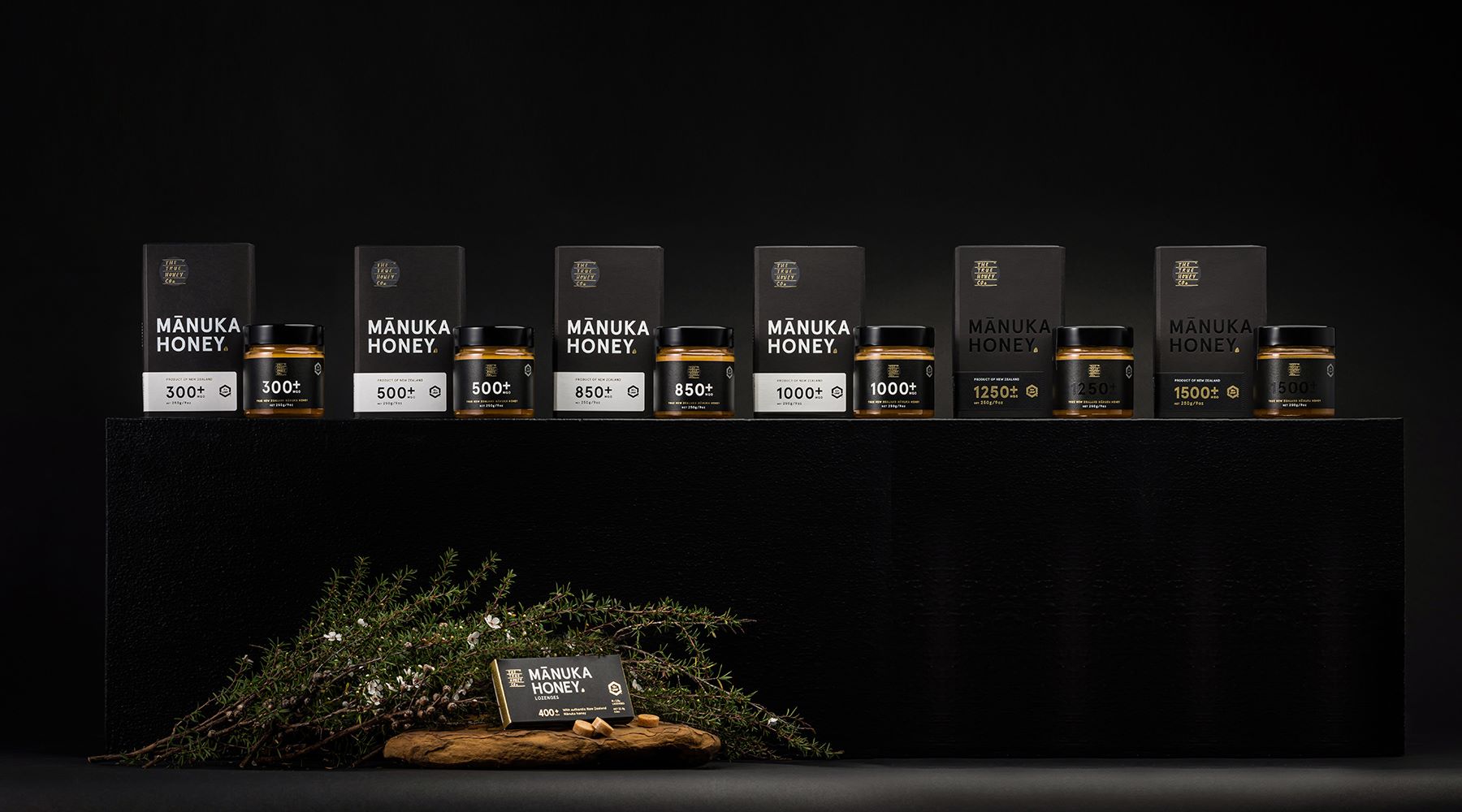
New Zealand mānuka honey is produced by honeybees collecting nectar from the Mānuka plant (Leptospermum scoparium).
Mānuka honey contains a naturally occurring compound called methylglyoxal (MGO) which is known for its unique antibacterial properties.
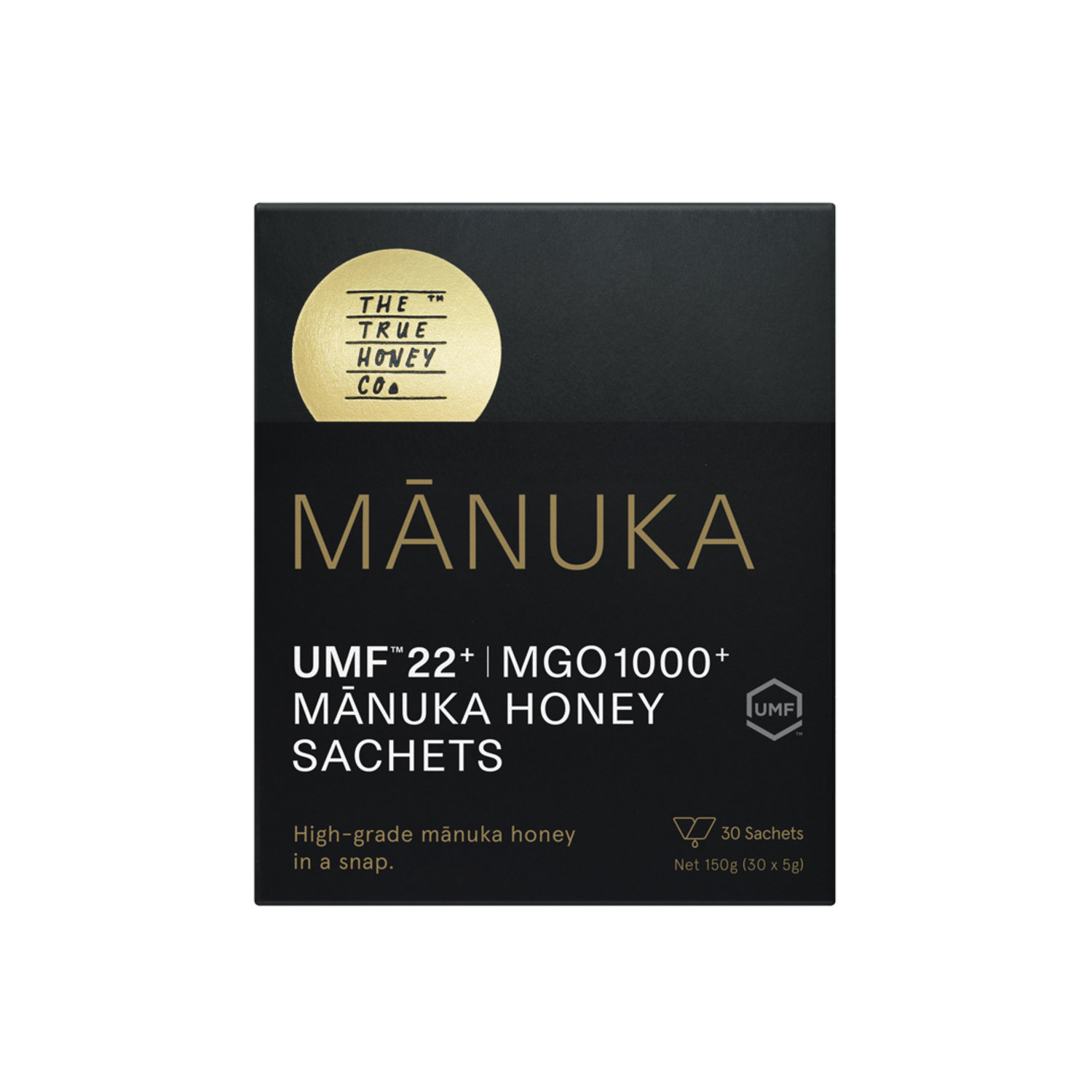
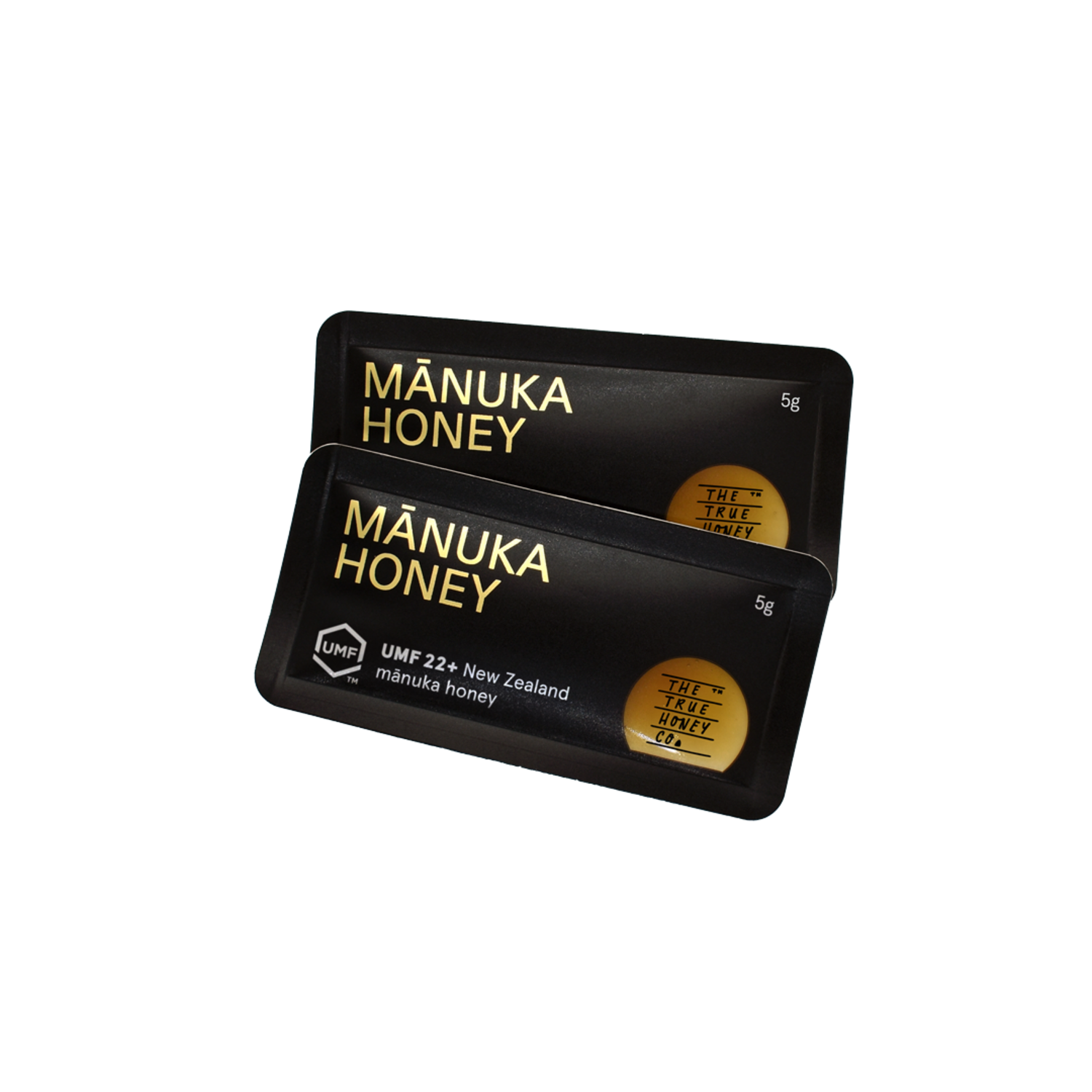
These sachets are produced and packed in New Zealand with mānuka honey sourced from hives in remote locations of New Zealand.
Origin Verification
The True Honey Co. is licensed by NZ Fernmark (Licence number: 100086) which verifies New Zealand as its country of origin. The Fernmark licence is a formal government recognition of The True Honey Co.'s connection to New Zealand.
New Zealand has strict regulations and a rigorous testing and grading system in place to ensure the authenticity and quality of mānuka honey.
MGO stands for methylglyoxal, a naturally occurring compound found within mānuka honey. MGO is one of the compounds tested to determine the quality and purity of mānuka honey. The higher the MGO rating the more methylglyoxal in the honey.
Laboratory Testing
The True Honey Co. mānuka honey is independently tested at an accredited laboratory for authenticity, safety, quality and methylglyoxal (MGO) before being packed into sachets.
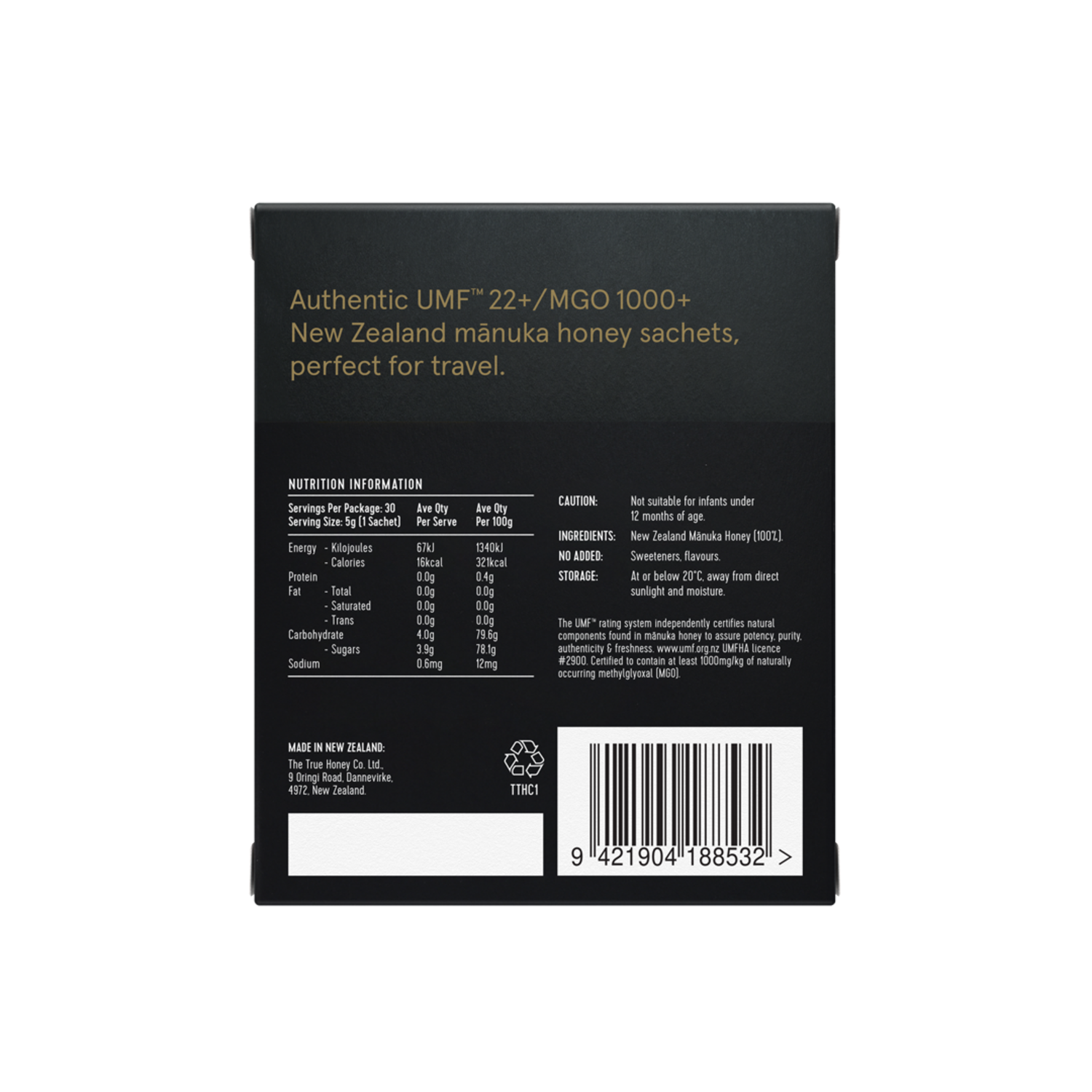
Independent laboratory testing ensures that the honey meets the scientific definition of mānuka honey and contains at least 1000mg/kg of methylglyoxal.
Auditing
All The True Honey Co.'s processing, transport and storage facilities are independently audited to verify the requirements of their Risk Management Programme ( RMP ).
As part of their commitment to care for the fragile ecosystem, The True Honey Co. use helicopters to fly the hives into their environment to avoid disruption to the bees and their native bush home.
This product contains 100% authentic New Zealand mānuka honey to naturally support energy levels.
The honey has been independently tested to contain at least 1000mg/kg of methylglyoxal (MGO).
Messages from The True Honey Co.
Welcome to True Wellness
The True Honey Co. is a mānuka wellness company delivering powerful moments of mānuka for true wellbeing. Sourced from pristine New Zealand forests and crafted for everyday ritual, our premium mānuka honey is incredibly good for you and exceptionally delicious too. Only 300 MGO and above qualifies for our range as we only work with the good stuff – pure, potent and with maximum wellness benefits.
The True Honey Co. mānuka honey is for those that understand prioritising their health isn’t indulgent, it’s a must. By taking time for a teaspoon of high grade mānuka honey everyday, you’ll pave the way for a lifetime of wellness.

 Origin
 Quality
 Environmental

 Nutrition